Are New Cars Really Less Reliable? The Truth About Modern Vehicle Dependability
Are Older Cars Better Than New Cars
Cars have never been smarter, so why do they seem to spend more time in the workshop? With extended wait times and inflated prices, people are noticing the shift now more than ever. But are modern cars actually unreliable or has our standard changed?
Studies Show More Complaints in New Cars
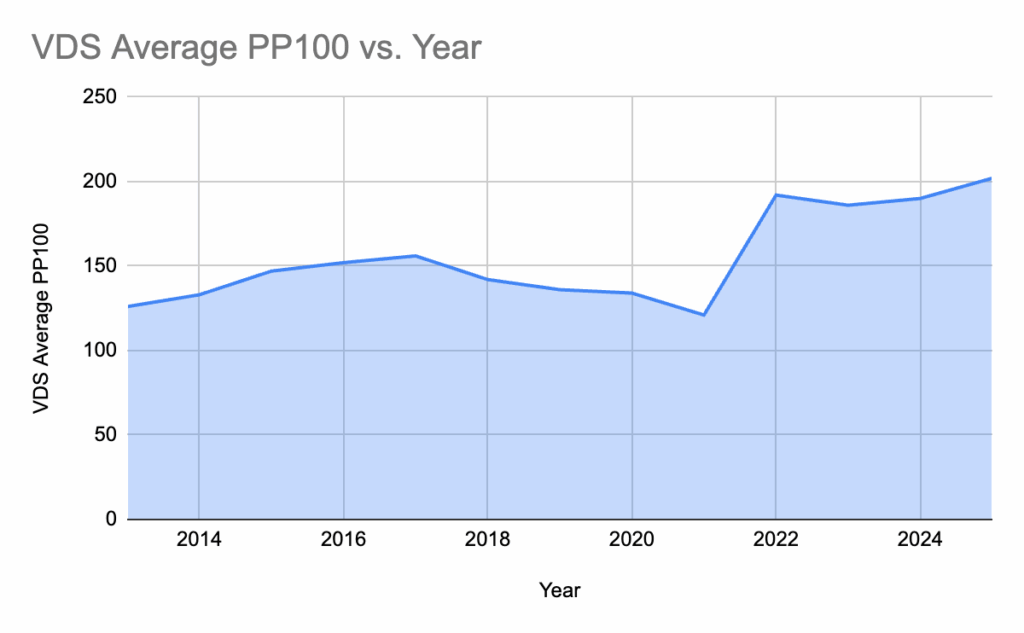
(Above) J.D. Power Vehicle Dependability Study shows increase in average problems per 100 vehicles.
J.D. Power Vehicle Dependability Study – Increase in Modern Car Complaints
J.D. Power’s Annual Vehicle Dependability Study (VDS) demonstrates an increase in the average reported problems per 100 vehicles (PP100) from 2013 to 2025. A few key points from this study include:
- The average PP100 rose from 126 in 2013 to 202 in 2025.
- J.D. Power reported an increase in problems related to software defects.
- Lexus & Buick had the fewest problems per 100 vehicles.
So what do these vehicle reliability trends mean for everyday drivers? It shows that the number of complaints per vehicle has increased, but it doesn’t necessarily mean new cars are less reliable. It is important to consider what is causing these new car reliability complaints.
What Affects New Car Reliability
With tighter emissions standards and rising costs, car manufacturers have been forced to compromise. But where there is compromise, there is a cost.
Manufacturers Are Using Lighter Weight Components
Manufacturers use lighter weight components for various reasons, primarily to:
- Reduce production costs
- Improve fuel economy & reduce emissions
- Increase performance.
Unfortunately, lighter components may also wear faster. This can reduce the life of the vehicle and lead to issues with reliability. But it’s not just mechanical changes reshaping reliability, modern cars have been redesigned by technology.
NHTSA Recalls By Manufacturer Shows Increase In Electrical Recalls
Systems like Advanced Driver Assistance, Autonomous Emergency Braking, Electric Power Steering, and Adaptive Cruise Control are becoming increasingly popular in modern vehicles. New technology offers enhanced safety and better driveability, but they are not without issues.
The NHTSA (National Highway Traffic Safety Administration) Recalls By Manufacturers Study shows a significant increase in electrical system recalls. A few key points from this study include:
- The electrical system has since become a prominent recall category in new vehicles, a notable change from 2001.
- In 2001, the electrical system category was overshadowed by powertrain and engine/cooling.
(Above) NHTSA Recalls By Manufacturer graphic compares top 5 recall categories from 2000 to the same categories 2025.
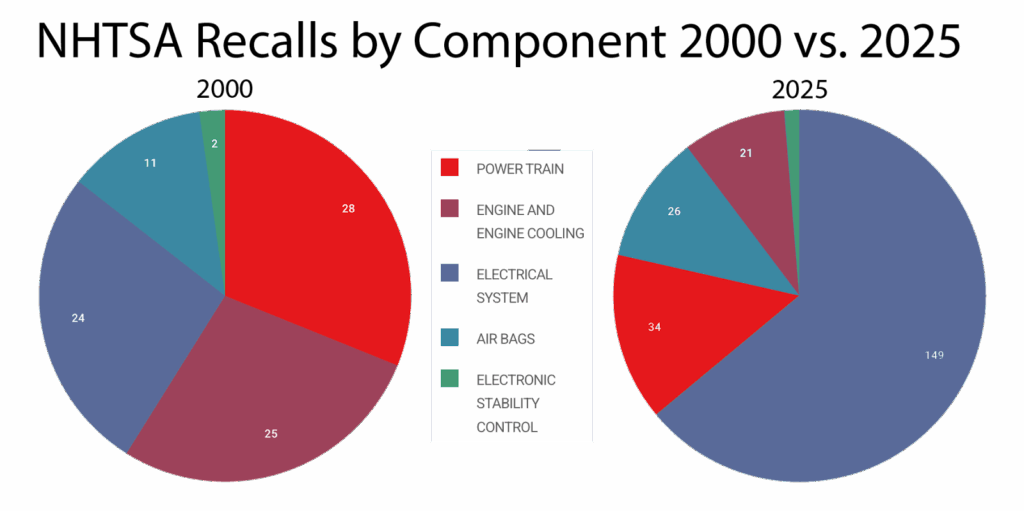
This means that in older vehicles, you can expect more mechanical and powertrain issues. In modern cars, you might experience more issues with the electrical system, which includes everything from the brake lights to the engine control unit.
New Cars Face Tighter Emissions Regulations
Car manufacturers are tightly bound by emissions regulations, which has prompted the development of emission control technologies. This includes exhaust gas recirculation (EGR), catalytic converters, and diesel particulate filters. While these are highly effective at controlling emissions, their effect on engine longevity is controversial.
For example, the EGR recirculates exhaust gases into the cylinders, reducing nitrogen oxide (NOx) emissions. However, the recirculated exhaust gas leaves carbon deposits that can restrict the intake and affect performance.
These are trade-offs manufacturers are forced to make by law, but it does affect the longevity and reliability of new cars.
Has New Car Reliability Really Gotten Worse
To keep up with the modern demand for connectivity, emissions control and road safety, manufacturers have implemented innovative technology into vehicles. This begs the question – are modern vehicles really less reliable, or just different?
With more technology there are more points for failure, and more opportunities for customer feedback. This is something that is not emphasised in the recent studies of reliable vehicles. A growing number of complaints are of non-critical systems like infotainment screen faults – which are inconvenient, but do not affect the actual reliability of the vehicle.
Despite the compromises manufacturers are making, modern cars are still more dependable in many ways.
Car Warranties Have Never Been Better
An overlooked factor in car reliability is the warranty. This is an area where modern cars are dominating. The typical car warranty in 2001 would protect your vehicle for only 3 years and 60,000 miles (or 100,000 kilometers). After this time, you’re on your own.
Modern cars have warranties reaching 7-10 years and unlimited mileage, demonstrating the commitment of manufacturers to producing reliable cars.
New Cars Prevent Issues In Real-time
Modern vehicles are so advanced, they can make live adaptations to the running condition to improve emissions, driveability, and reliability. Thanks to onboard diagnostics 2 (OBD2), cars can effectively troubleshoot problems and make adjustments to prevent damage to the vehicle.
These adjustments happen in real time, actively preventing issues and ensuring a comfortable ride. Unfortunately, all it takes is one faulty sensor to throw off the whole system.
Yet even with this risk, the ability to detect and adapt to faults before they cause damage represents a huge leap forward in reliability. Older vehicles relied on the driver’s senses, now modern cars can sense, analyse and act in milliseconds.
So while there may be a warning light on the dash, it’s also proof that the system is doing its job: to prevent small problems from becoming catastrophic ones.
But modern vehicle dependability goes deeper than that, it’s also about liability.
Transfer of Responsibility From Drivers to Manufacturers
Manufacturers strive for the smoothest customer experience possible, which involves putting less responsibility on the consumer.
Have you ever noticed that many modern cars no longer come with a spare tyre, and instead come with a tyre repair kit? There are various reasons for this change, including weight reduction and space-saving. But, a driving cause for this change is actually because fewer people know how to change their tyre.
This small change represents a broader trend in car design – the gradual transfer of responsibility from the driver to the manufacturer. The loss of driver knowledge increases down-time. Cars cannot be fixed on the side of the road anymore, and as a result reliability feels lower.
Cars are now built to be as maintenance-free as possible, but this convenience comes with compromise in reliability and repairability. With this in mind, it’s important to find a reliable car brand that won’t leave you stuck on the side of the road.
Top 5 Most reliable Car Brands in 2025
The 2025 J.D. Power U.S. Vehicle Dependability Study statistically represents the top 5 most reliable car brands in 2025 to be:
- Lexus
- Buick
- Mazda
- Toyota
- Cadillac
These brands had the fewest reported problems per 100 vehicles. This study considers everything from powertrain issues & electrical faults to infotainment system issues and driveability.
The Standard Has Changed For Reliable Cars
In short, modern cars aren’t less reliable, they are just built for a new kind of driver. The less we are expected to know, the more we depend on the vehicle.
- Studies show an increase in reported issues over the past decade.
- The number of electrical system recalls has also increased to become one of the prominent causes for recalls.
- Technology in cars has changed over the years. This has many benefits in comfort, driveability and reliability – but there are drawbacks.
- Manufacturers build cars to suit the current market, and this includes accommodating for people who aren’t mechanically minded.
Think of it this way: Modern vehicles are like smartphones on wheels, powerful but not immune to occasional glitches.
Australian Mechanic
Dominic Adriano is an Australian Mechanic, car enthusiast and the director of AutoTech Workshop Solutions. He is dedicated to continually learning in the automotive industry and sharing knowledge with others.