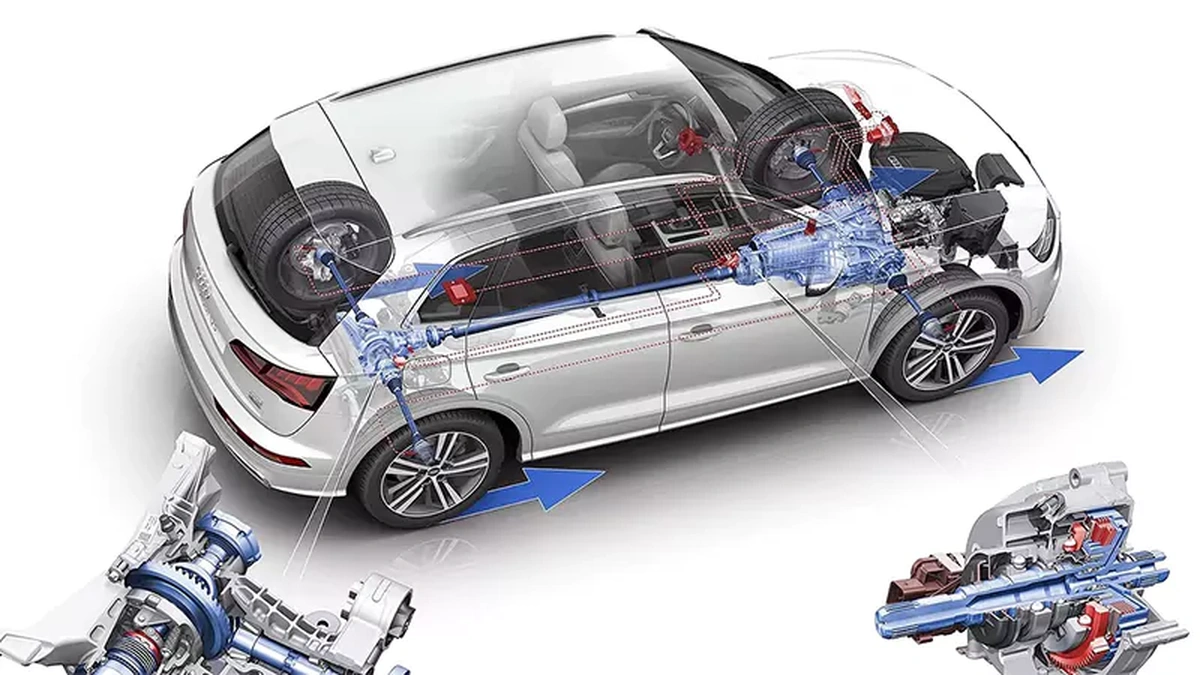
Audi Quattro Systems and Their Impact on Tire Replacement and Rotation
The quattro all-wheel-drive system in Audi vehicles is among the most advanced of its kind in the world, offering maximum grip and handling on a variety of surfaces. Although this high-tech system improves tire performance and safety, it also requires tire management approaches that differ markedly from conventional two-wheel-drive vehicles.
Meeting these requirements avoids expensive drivetrain issues, Sport Quattro-style, and ensures the handling balance that has made quattro Audis so special.
In This Article
How does the quattro system distribute power?
The quattro system calculates wheel speed, available traction, and current driving circumstances in real time, dispensing torque to all 4 wheels. Some quattro systems are full-time with a center differential, while others are on-demand systems that engage the rear axle when slip is detected. The behavior depends on the model and drivetrain layout.
The full-time system dictates that all four tires spin within a couple of centimeters of each other in terms of rolling circumference, so any small difference in a tire’s diameter can cause the system to fight itself rather than the asphalt.
Quattro systems react to wheel-speed disparities caused by differences in rolling circumference (which can be due to uneven tread depth), but lower differences may not trigger system compensation.
Afterward, the system uses a small amount of brake force or changes the torque distribution, putting unwanted strain on the clutch packs, differentials, and the transfer case. This continuous compensation over time leads to increased wear on expensive drivetrain components, which can often cost thousands to replace.
What makes tire replacement different for Quattro vehicles?
Audi is especially strict about replacing tires on a quattro-equipped Audi, as the system cannot cope with a variance in rolling diameter that standard cars can. Several Audi models specify maximum permissible differences in tread depth, typically 2/32 to 4/32 of an inch, and recommend replacement or matching, depending on the model and powertrain configuration.
Changing tires also requires specific parameters, such as speed ratings, load indexes, and construction types. Combining different types of tires–for instance, run-flats with standard tires, or differing tread compounds–produces handling characteristics that the quattro system is sensitive to, and Audi has determined that differences must remain within specified tolerances to prevent unnecessary stress on the drivetrain.
In even mild conditions, however, differences in rolling circumference can place undue strain on the drivetrain under normal driving, and even when tire sizes match perfectly, variations in construction or tread design can cause differential rolling circumferences.
Why does proper rotation matter for quattro performance?
Proper tire rotation avoids the diameter difference that can damage an AWD system by ensuring even wear across all four positions, which lengthens tire life. The unique properties of Quattro vehicles usually mean rotation at set intervals based on driving habits, tire types, and model specifications. The rotation pattern also plays a key role, with some Audi models spelling out specific movement sequences based on their torque-split characteristics.
Most rotation patterns for front-to-back methods are suitable for most quattro setups, but staggered fitments or directional tires require other methods. Disregarding rotations or lengthening intervals beyond what the manufacturer recommends will usually lead to uneven tread depth, ultimately necessitating replacement of all the tires rather than just the most worn pair, and often well before the expected time.
Where do you find model-specific tire requirements?
You can find the specific tire specs that you cannot find in generic tire advice in official service information. Suspension geometry, weight distribution, and quattro calibration vary from model to model, altering the ideal traits of a tire and how it rotates. Uniforming your rotation schedule or matching the guidelines for two-wheel-drive vehicles can put your vehicle at risk of missing important requirements.
Audi manuals are now available digitally, simplifying the process for both technicians and owners by providing factory-approved information to quickly address everything from tire sizes and rotation patterns to wheel bolt torque and tire pressure monitoring. Includes limits on acceptable tread depth, the style of approvals Audi normally gives based on its internal testing, and real-world tyre mix advice that could impact your warranty.
What happens when tire guidelines aren’t followed?
Recently, an Audi A6 owner in Connecticut hit a curb and only replaced the two front tires, leaving the rear tires with 5/32 inch less tread depth. Less than two weeks later, the driver experienced a slight vibration when accelerating at highway speed and intermittent stability control warning lights.
The quattro system was always working to make up for the size disparity between the front and rear axles. After some searching through factory service information and swapping all 4 tires to matched sets, there was no vibration, and the truck started delivering silky-smooth power again.
Tire professionals who work on high-end all-wheel-drive vehicles see these situations all the time as owners try to save a few bucks by only replacing part of the tires. Transfer case repairs can cost multiples of the price of two additional tires, so any short-term savings evaporate. Appropriate rotation schedules avoid these configurations and achieve uniform wear, ensuring that all four tires wear uniformly and reach the end of their service life together.
To get the full performance and safety benefits from your Audi engineering investment, abide by quattro-specific tire management guidelines. And that precision that makes quattro so special when conditions get challenging is predicated on an equal measure of precision in selecting, replacing, and maintaining the tires over the life of the vehicle.